“Because I say so” only lasts until you leave the room
A child who gets a good reason for a rule takes the rule with them. A child who just obeys leaves it at the door. Here's the research behind one of my principles: no rule without a good explanation for the child.

“Because I say so” might buy you obedience while you're watching. It won't buy you understanding that lasts. Decades of research point the same way: kids who get good explanations make the rule their own.
Two ways to set limits
Back in the 1960s, the developmental psychologist Martin Hoffman started sorting the way parents set limits into two camps. One he called power assertion: “because I say so”, threats, punishment. The other he called induction: the same limit, but with the reason attached, often by pointing at what the behaviour does to other people.
The difference doesn't show up in the moment. Either approach can buy you peace at the dinner table. It shows up later, in what psychologists call internalisation: whether the rule lives in the child, or only lasts as long as you're in the room.
- Kids who get explanations score higher on empathy and moral development, a finding that goes all the way back to Hoffman and Saltzstein's classic 1967 study of seventh graders.
- The explanation can point to other people: “When you pick up your phone at the table, grandma feels less important than a screen.” That's practice in perspective, empathy and putting yourself in someone else's shoes.
- Power assertion buys obedience under supervision. The research finds little sign that a rule like “No screens after 8 pm. That's just how it is.” survives once nobody's watching.
Kids who just obey leave the rule behind when they walk out the door. Kids who understand the rule carry it with them.
Motivation moves in
The second line of research is about motivation. Self-determination theory, as the researchers call it, treats giving reasons for your rules as one of the clearest markers of a parent who supports their child's independence. And the findings all point the same way, across cross-sectional studies, longitudinal studies and experiments: children whose parents explain their rules regulate themselves better, are more motivated and are simply doing better. A 2024 meta-analysis lands on the same picture.
So what about screen rules?
Screens are where “because I say so” backfires hardest. The research on how parents manage media use shows that pure restriction without conversation can achieve the opposite of what you want: the forbidden gets more tempting, and use bounces straight back up the moment nobody's checking. Psychologists call it “reactance”. The rest of us know it as forbidden fruit. What actually reduces risk is what researchers call “active mediation”: talking about the content, explaining, joining in and repeating it all over time.
Two caveats before you run with this
First: age. A three year old doesn't need a lecture, just a short reason and a calm adult who follows through: “The iPad sleeps on its charger in the living room, so your brain gets to sleep too. Come on.” The explanation grows with the child.
Second: explaining is not the same as negotiating. You give the reason once, calmly, and the rule still stands. The goal isn't agreement tonight. It's understanding, eventually.
When the protest comes anyway
We parents rarely get to introduce a rule without pushback. Once you've explained both the rule and the reason and the protest comes anyway, you don't owe anyone a second lecture. Answer calmly instead: “I hear that you disagree, but the rule stays as it is for now. If you want, bring me a counter-proposal tomorrow and we'll take it from there.”
That one answer does three things: it shows you listened, makes clear the rule isn't up for negotiation right now and leaves a way forward.
If you have a teenager, or a child at the age where absolutely everything must be challenged, you won't have the energy for every round. That's fine. “No. I don't have time for a speech right now, so you'll have to trust that I've got a good reason. We can go through it tonight.” That sentence only works because you usually do give the reason. Lean on it every time, and your child stops believing it.
Negotiation, just not in the moment
There can be room to negotiate, just not right now. Picture a child chasing a ball, eyes locked on it, a road up ahead. When you shout “Stop!”, the child has to stop. No discussion.
That example works word for word on kids. They listen first, and you talk it through afterwards. The point isn't blind obedience. It's that the explanation comes later, and that it reliably comes. That's the deal that makes “stop” work on the day it really counts.
And the negotiation afterwards is worth every minute. Your child gets heard, and gets to practise thinking a case through and arguing it properly. Both are skills worth sending them off with.
There's real value, too, in a child seeing that a parent can change their mind when the argument is good enough.
You might discover something about yourself too
Try to explain why a rule applies and you'll sometimes discover you're not entirely sure yourself. Plenty of rules run on autopilot because we heard them all through our own childhoods and never got a good reason either. “Elbows off the table.” “Don't go out with wet hair.” “You'll catch a cold if you stay out in the cold too long” (fun fact: no you won't, but a virus you're already carrying loves the cold and can flare up).
Here's a fun exercise: explain why you shouldn't play with your food. Harder than it sounds. “But I'm just making a dragon out of the broccoli” is a perfectly decent counterargument, and you can find yourself scrambling for something better than “because that's just not what we do”.
Maybe you land on the rule really being about something smaller: food shouldn't go to waste, and nobody fancies mopping the floor afterwards. Now the rule is smaller, but truer, and much easier to accept. Or maybe your house decides the broccoli gets to be a dragon.
Quite often I catch myself watching the kids, sprawled on the ground, happily filthy, and feeling envious. Why does society need everyone standing in the same boring queue? Which brings us to a small detour, and one of my favourite quotes:
You don't stop playing because you grow old. You grow old because you stop playing.
Right, back to the main point, and what this looks like in our house.
Closing thoughts
Explaining things up, down and sideways is exhausting when you hold the power to simply decide. But the payoff is real: we can genuinely see the value of all the good discussions we've had at home, in how reflective the girls have become.
My youngest (bonus) daughter, 12, builds seriously impressive presentations, arguing both sides of the case, whenever a tentative “no” lands on Roblox after her mum has seen some of its less charming games.
Rules are hardest with my 15 year old, who thinks there are far too many of them and would rather just do her own thing. I've never spent more time discussing rules than I do now, which surprised me :)
We've written our rules down, and when one of them frustrates her, we put it on the table: is it outdated, or is she ready to regulate herself? On phones, sadly, we keep seeing that kids and adults alike can be fairly powerless against the algorithms.
I've told the girls more than once that they're lucky to have someone looking out for them and how they use their screens. Nobody did that for us. In our house we've even flipped it around: I gave myself a 5 minute daily limit on Instagram, and if I “cheated”, my daughter collected a serious sum of money.
The toolbox
Three steps to give your rules a reason.
Know a mum or dad who was raised on “because I say so” and is passing it down? Send them this (if you dare :).
Sources
- Hoffman & Saltzstein (1967): Parent discipline and the child's moral development, Journal of Personality and Social Psychology ↗
- Joussemet, Landry & Koestner (2008): A self-determination theory perspective on parenting, Canadian Psychology ↗
- Bradshaw mfl. (2024): Meta-analysis of autonomy-supportive and controlling parenting ↗
- Nielsen mfl. (2020): Linking parental mediation practices to adolescents' problematic online screen use, systematic review, Journal of Behavioral Addictions ↗
Comments
No comments yet. Be the first to say what you think.






 TikTok
 Roblox
 Snapchat
 Minecraft
 Fortnite
 YouTube
 Mudita Kompakt
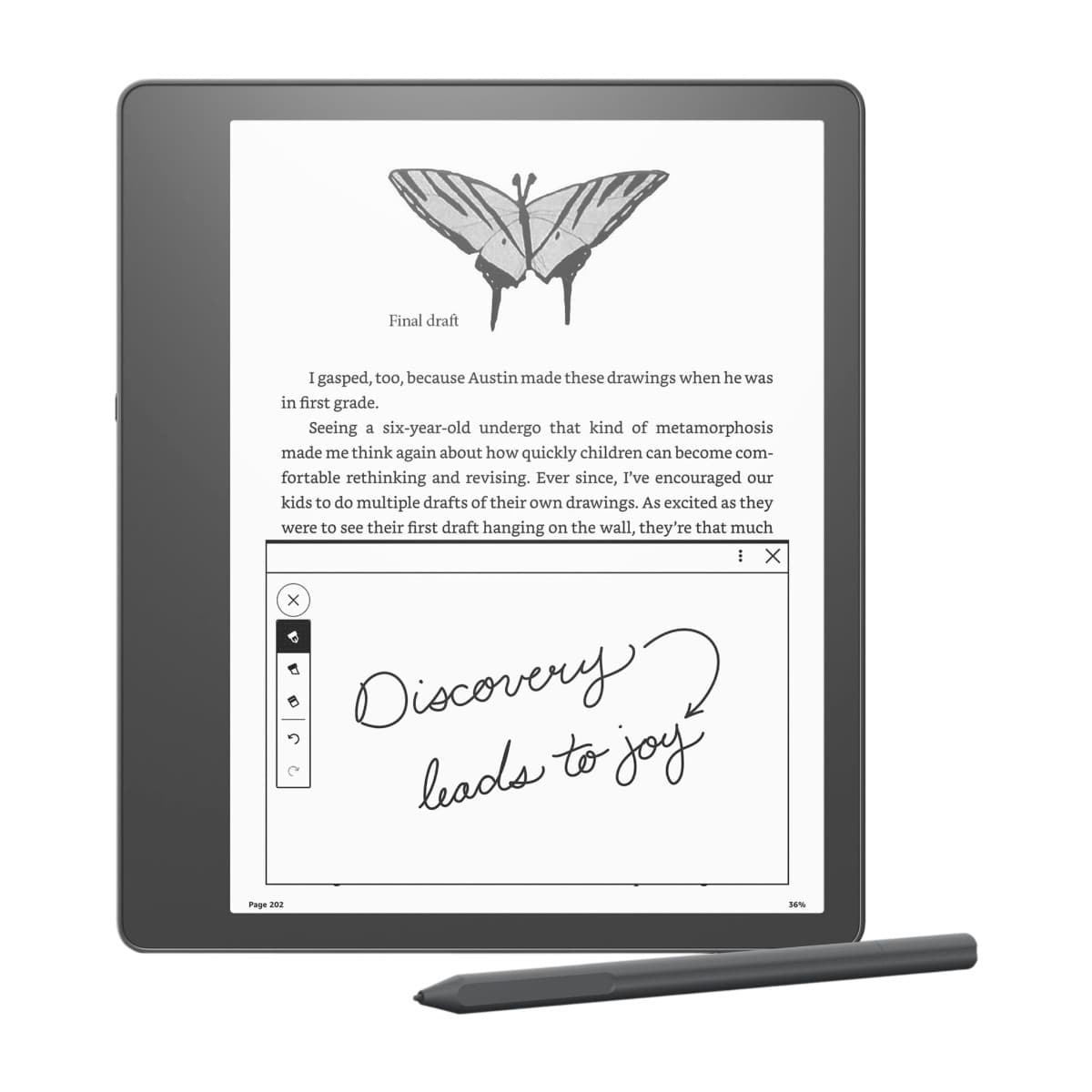 Kindle Scribe
 Smiling Mind
 Opal
Opal Balance
 Homie
Homie