
How do I stop the nagging and whining about screens?
Be consistent. A child who learns that nagging never works gradually grows into smarter questions and better arguments.
Humphreys showed as early as 1939 that behaviour rewarded only some of the time is far harder to unlearn than behaviour rewarded every time. It is the mechanism inside a slot machine and a feed, and it applies to nagging. Patterson called it “the reinforcement trap”: give in, and your child gets their way while you get peace, so you both do it again. That is why I keep my answer the same every time, calmly and with a bit of humour. I happily make exceptions, but only in answer to a question, never as the result of nagging. The formula in our house: the more you nag, the less you get.
The mechanism that produces more nagging
Nagging. Whining. The two sounds every parent dreads. Before you can put a stop to them, it is worth understanding the mechanism that produces more of them.
In an experiment on something as small as the blink reflex, the psychologist Humphreys showed as early as 1939 that behaviour rewarded only some of the time is far harder to unlearn than behaviour rewarded every time. The finding has a name of its own, “the partial reinforcement extinction effect”.
It is the same mechanism that makes a feed hard to put down. A reward that arrives now and then, on no schedule you can predict, digs in far deeper than one that arrives every time. It is the third step of the Hooked model and the engine inside every slot machine. A no that occasionally becomes a yes trains the nagging in exactly the same way.
Seen from the child's side, it makes perfect sense. If nagging has worked once, there is a chance, and the brain hunts for that chance as doggedly as it hunts for the next good video in the feed. Your child is only doing what has paid off before.
Not strict, just predictable
The single most important thing is to be consistent. Not strict, just predictable. And if you can manage it, deliver the no calmly, as if it were the most obvious thing in the world. A no in a raised voice has already given the nagging something, namely a reaction.
The psychologist Gerald Patterson showed that when parents give in to nagging and whining, both parties are rewarded. The child gets their way, and the parent gets peace. He called it “the reinforcement trap”. The child learns that nagging works, the parent learns that giving in brings quiet, and next time both of you start a little closer to the same outcome. It is one of the best documented mechanisms in research on parents and children.
Gardner went a step closer and observed families with young children in their own homes, watching what happened in the conflicts. Parents of children with behavioural problems far more often failed to follow through on their own instructions. Inconsistency and the family's level of conflict were closely linked.
The way I read those two studies, they describe the same thing from two sides. Patterson explains why giving in is so easy, and Gardner shows what seems to follow over time. Neither proves that inconsistency creates difficult children. It could just as well run the other way, with a child who pushes back a lot wearing down the parents' consistency. But taken together with Humphreys, they give me a clear answer about where to put the effort.
Give in once out of ten and you haven't been consistent nine times. You've taught your child that ten attempts can pay off.
The lines I use at home
The lines I use at home, which have survived from nursery age into the teens:
- Nagging. “Have you ever once got something by nagging?” or “The more you nag, the less you get.” Both work surprisingly well, but only for as long as they stay true. The first time nagging wins, the lines are worthless.
- The whiny voice. I'm allergic to the whiny voice, which plenty of kids, mine included, drag all the way into their teens. With a bit of humour I've always gone with: “I don't speak whine, so you'll have to try that again in your normal voice.” It gives the child a way out that isn't a defeat.
The first line is a question, and the child can actually answer it. A child who has nagged for five years without getting anything out of it knows the answer well, and saying it yourself is different from having it served to you. The second is information about how things work in our house, and information can stand being repeated in a way criticism cannot. “You're nagging again” is criticism, and the child goes on the defensive. “The more you nag, the less you get” is a rule, and a rule is something a child can deal with.
The whiny voice is rarely a choice. It comes on its own when something feels unfair. Asking for the normal voice does not say the wish is wrong, only that this channel is closed. The child can try again without having lost anything, and quite often the wish shrinks a little once it has to be put into words. The tone decides whether it works, so I try to say it with a smile.
Good leaders don't follow rules blindly
Things are rarely black and white, and leading a family well does not mean following rules blindly. When a situation genuinely calls for an exception, make one. But make an occasion of it: tell your child exactly why you think an exception is right this time, and that you expect it not to fuel any nagging next time. I have repeated the same formula more times than I can count: the more you nag, the less you get.
If you can smell a contradiction in that last paragraph, let me explain. When I decide an exception is deserved, I do not grant it if nagging would be what earned it, only if a question did. More than once I've said: “You know what? If you'd asked me properly instead of nagging, I'd actually have made an exception today. But I don't want you learning that nagging gets you anywhere, so next time try just asking nicely.”
That line shows the child that the door really was open, and exactly what closed it. It is a fairly precise lesson in how to get things done in life: you ask properly, at a moment that suits, with a reason. Children are quick, and in our house it did not take many rounds before the request arrived in a completely different wrapping.
Now for the part that is hardest to hold. Consistency comes easiest when you are well rested, and the nagging rarely picks that moment. I don't think the kids plan it, but they know us, and they notice when the resistance is low. That is where a no slides into a “yes, fine, whatever”, and that is precisely the yes that teaches the child most. When you are tired, I think a short, calm no beats a long discussion you don't have the energy to see through.
The point isn't never saying yes. It's never saying yes because your child nagged.
If you are going to say yes, say it straight away, for a reason you can stand behind. “Yes, today you can have an extra half hour, because you've been outside all day and now it's raining.” Then it was your decision, and your child knows why.
And if you have already given in? Everyone has. Then it is the next answer that counts, and I find it helps to say so plainly: “Yesterday I said yes when you nagged, and that was my mistake. From now on, what I said stands.” Children cope well with adults correcting themselves, and they watch closely to see whether the new line holds.
The limit still needs a reason
And the limit still needs a reason attached. A child who knows why nags less than a child who only got a no. A no without a reason is just a wall, and a wall is something you can try to get around. A no with a reason is something your child can disagree with, and disagreement is the start of a conversation.
Consistency without a reason is just power, and power stops working around the time your child grows big enough to argue back.
For the same reason, taking the phone in anger rarely helps. The phone comes back, the nagging comes back, and what the child learned in the meantime was that the strongest decides.
The best place for a screen limit is therefore somewhere neither of you has to defend it every evening. A limit that lives in the system, set together with your child, switches itself on at 20:30 and needs no parent saying no for the twentieth time. The nagging moves from every single evening to the one conversation where the limit is set, and that conversation you can have rested, at the kitchen table, with the reason in place.
On iPhone the tool is called Screen Time, on Android Family Link.
The dialogue with the kids
The words below fit from school age upwards, and they have held in our house all the way into the teens.
“I'm not saying no to be mean. I'm saying no because we have an agreement, and an agreement that changes whenever someone nags isn't an agreement. You're welcome to ask once if you're wondering about something, but nagging and whining will never get you anywhere.”
For the youngest, one sentence and a grown-up who does something afterwards is enough: “I hear you. The answer is no, and it won't turn into yes because you ask again. Come on, let's find something else to do.”
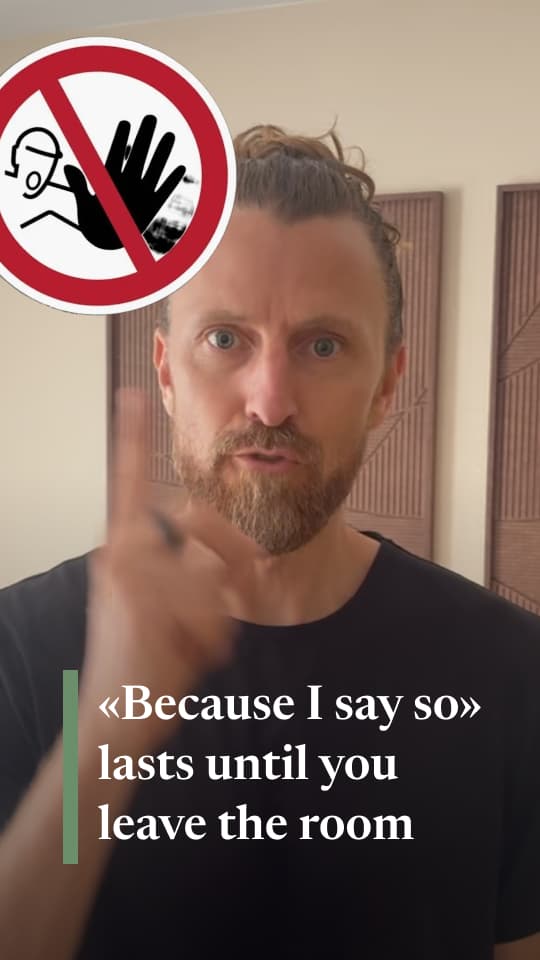
We always explain why: “Because I say so” only lasts until you leave the room.
The child who stops nagging starts arguing
The lovely thing about holding the line is what grows in its place. A child who has learned that nagging never works looks for something else that does, and what is left is asking properly. Picking the moment. Explaining why. Coming with a proposal that also takes account of what you care about. That skill is learned right here, in the argument over an extra half hour on a Tuesday.
At home I see it most clearly in my 15-year-old. These days she arrives with arguments I genuinely have to think about, and now and then I lose the discussion. That is perfectly fine. A no that can be turned by a good argument teaches her something entirely different from a no that could be turned by repeating the question twenty times.
The nagging does not vanish overnight, and in our house it still turns up on tired days, in the kids and in me. But it has become rarer and shorter, and what has come in its place are conversations I enjoy having. The calm arrives in time, and a child who has learned to ask properly takes that skill out of the house with them.
The toolbox
Four moves against nagging.
Know someone else who's allergic to nagging and whining? Send them this.
Common questions
If you have read the whole article, try answering the questions yourself before you read the answers. A small test of how much has stuck.
How do I stop the nagging and whining about screens?
Be consistent. A no that sometimes turns into a yes teaches your child that nagging pays, and the lesson sticks. Answer calmly and the same way every time, give the reason, and don't say yes because your child nagged. Nagging gradually turns into proper questions.
Why do children nag about screens?
Because it has worked before. A reward that arrives unpredictably sticks far harder than one that arrives every time, the same mechanism as a slot machine. Give in once out of ten and your child has learned that ten attempts can pay off.
What do I say when my child nags about screen time?
At home I ask “Have you ever once got something by nagging?” or say “The more you nag, the less you get.” Both work as long as they stay true, so the answer must hold afterwards. A raised voice already feeds the nagging.
How do I get my child to stop whining?
With a bit of humour. I say, smiling: “I don't speak whine, so you'll have to try that again in your normal voice.” That channel is closed, but the wish can still be heard, so the child has a way out that isn't a defeat.
Why is it so hard to be consistent?
Because giving in pays off for both of you in the moment: your child gets their way and you get peace. Children also notice when resistance is low, so when you are tired, I think a short, calm no beats a long discussion.
Is it OK to make exceptions to the screen rules?
Yes, when your child has asked properly. Make an occasion of it: say yes straight away, explain why it fits today, and say you expect it not to lead to nagging next time. If the wish arrives after nagging, I hold the no.
What do I do if I have already given in to nagging?
Everyone has. The next answer counts. Say it plainly: “Yesterday I said yes when you nagged, and that was my mistake. From now on, what I said stands.” Children cope well with adults correcting themselves, and they watch to see whether the new line holds.
Do I always have to explain why I say no?
It pays off. In my experience a child who knows why nags less. A no without a reason is a wall your child tries to get around. A no with a reason can be disagreed with, and disagreement is the start of a conversation.
Should I take the phone away when my child nags?
Rarely, and especially not in anger. Your child learns that the strongest decides, and the nagging comes back with the phone. A time limit set in advance in Screen Time or Family Link, together with your child, holds better than one taken in the moment.
How do I stop arguing about screen time every evening?
Move the limit into the settings. A time limit in Screen Time on iPhone or Family Link on Android switches itself on, so nobody has to say no every evening. Set it together with your child, with a reason, and the argument becomes one conversation.
Sources
- Humphreys (1939): The effect of random alternation of reinforcement on the acquisition and extinction of conditioned eyelid reactions, Journal of Experimental Psychology ↗
- Oregon Social Learning Center: Family based interventions for child antisocial behavior, overview of Patterson's coercion model ↗
- Gardner (1989): Inconsistent parenting, is there evidence for a link with children's conduct problems? Journal of Abnormal Child Psychology ↗
Comments
No comments yet. Be the first to say what you think.






 TikTok
 Roblox
 Snapchat
 Minecraft
 Fortnite
 YouTube
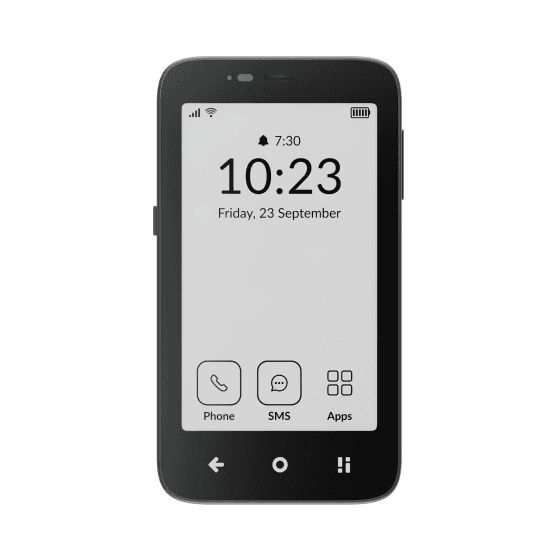 Mudita Kompakt
 Kindle Scribe
 Smiling Mind
 Opal
 Balance
 Homie