Screen time for kids and teens, a complete guide
In June 2025 Norway finally got official screen time advice, and the numbers themselves are just below. But no number has ever settled an argument at the dinner table. So most of this guide is about the rest of the job: why the limits exist, how to make them hold without daily nagging and what to say when your child asks why.

Norway finally has official screen time numbers: no screens for children under 2, at most an hour for ages 2 to 5, an hour and a half for 6 to 12, up to three hours for teenagers. The advice covers free time, and the numbers are ceilings. Less is always fine. But numbers alone don't hold. Parents and kids both need to understand the reasoning behind the limits, and the limits need to live in a system rather than in willpower. What they protect is sleep, friendships and free time.
Norway finally has official numbers
On 5 June 2025, the Norwegian Directorate of Health published Norway's first national screen time advice for children and young people. Until then, Norwegian parents had been borrowing numbers from the WHO and American paediatricians. Now there's one official answer to the question every parent googles, broken down into four age brackets.
The numbers cover free time only. School, homework and jobs don't count towards them.
- Under 2: avoid screens. The one exception is short video calls with you at their side.
- 2 to 5: at most half an hour to an hour a day, ideally less.
- 6 to 12: at most 1 to 1.5 hours a day, ideally less.
- 13 to 18: at most 1.5 to 3 hours a day, ideally less.
Notice the phrase doing the heavy lifting in every line: at most. The numbers are ceilings, and less screen time is always fine. They also work like a staircase. Each age bracket brings a little more time and a little more say, and every step has a reason you can give your child.
Screen limits are like bike seats: they're meant to be raised as your child grows.
Under 2: faces beat screens
The advice for the youngest is the strictest and the simplest: no screens. At this age the brain is built through interaction, through eye contact, responses and taking turns, and no app should be competing with a face that answers back. That includes screens in the background. A TV murmuring away in the corner steals from the small exchanges language is built on.
Good advice was thin on the ground when I became a dad in 2011, so I'll be honest: I parked my child in front of In the Night Garden far more times than I'd like to admit, just to steal a nap.
2 to 5: half an hour to an hour, and ideally together
For preschoolers the ceiling is half an hour to an hour a day, in practice a staircase from about thirty minutes at 2 up towards an hour at 5. And what they watch matters at least as much as how long: age-appropriate, editorially curated content without ads, and ideally with an adult nearby, watching along.
This age group has a whole guide of its own, including the criteria for judging any app: Which apps and how much screen time are OK for a 2 to 5 year old?
6 to 12: where the limit meets reality
At most 1 to 1.5 hours a day of free time. This is where the number starts to bite, because this is when the first phone arrives, gaming takes off and the first social apps come knocking. The advice is clear on two more things: hold off on social media, and limit access to internet-connected devices.
It's also the age where the limit should move out of willpower and into a system: Screen Time on iPhone, Family Link on Android, set up with your child the same day the device comes into use. The how comes further down. And as the apps start arriving one by one, the App Guide will help you make a call on the most common apps and games.
You'll hear “Everyone else is allowed to” more times than you can count. It's usually true-ish at best, and none of us wants to be the parent who lets their kid start early and puts pressure on everyone else's. Staying roughly in step with the other parents in the class matters all the way through school. And it's not easy standing there answering whether a 10 year old should have Snapchat (unless you've read every article on Balansebarn ;)
13 to 18: from control to collaboration
The Norwegian Directorate of Health recommends 1.5 to 3 hours a day for teenagers. It's a wide range because the age range is wide: a 13 year old and a 17 year old are in two different phases entirely.
13 to 15 are the negotiation years. The limits still exist, but now you set them together: your teen proposes a number, the two of you land on one, and the agreement goes into the system. These are also the years when the real conversations happen, about feeds, age limits and what gets shared, and those conversations matter far more than the minute count.
My daughter is 15, and we actually talk about limits more now than when she was younger, as she grows into the expectation of deciding things for herself. When we do, I tell her I'm a little envious of her for still having someone to guide her and decide a few things. We adults don't, and setting your own rules and healthy habits turns out to be genuinely hard.
16 to 18 is the handover. Soon nobody but them will be deciding anything, so the job now is to let go of the wheel gradually while you're still in the car. You become more adviser than guard. What protects them at this point is the door you've kept open and the habits built in the years before.
When siblings have different rules, the protest usually comes from the youngest, and it deserves a proper answer: “Your rules aren't the same as your big sister's, and that's deliberate. Screen time is like bedtime: it grows with you. Every year you get a bit more time and a bit more that's yours to decide. The experts on children and screens at the Norwegian Directorate of Health have done the maths on exactly this, so it isn't something I invented to be strict.”
The advice that applies at every age
Four rules run through all the age brackets:
- No screens in the last hour before bedtime.
- No screens in the bedroom at night.
- No screens at mealtimes.
- The screen is not a comforter. Feelings get calmed by people, not by a feed.
And a fifth rule is for us adults: limit your own screen use when you're with your kids. The Directorate of Health hasn't set an hourly cap for parents, but kids learn most from what they watch us do.
The first three we've practised at home for years. The last one, honestly, I'd never given a conscious thought. I suspect most of us know the pull of a screen's dopamine when we're feeling a bit sorry for ourselves (or is that just me?).
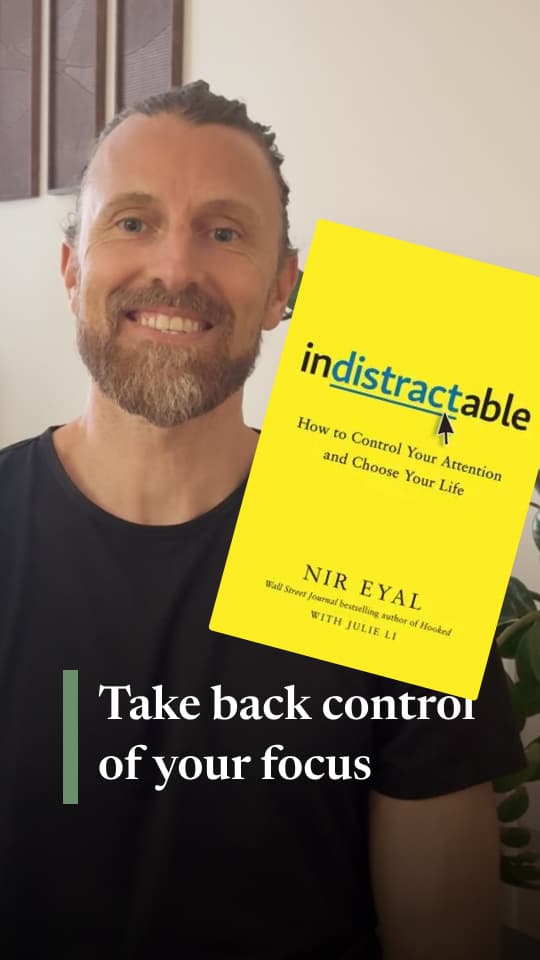
It's a well-documented human mechanism: we reach for unhealthy habits precisely when times are hard. When we're low we need decent food, good conversations, fresh air and movement. So why does the brain “trick” us onto the sofa with a bag of sweets, scrolling Instagram? Dr Julie Smith covers this phenomenon, along with many of the topics and tools from her practice as a psychologist, in Why Has Nobody Told Me This Before? (also available in Norwegian).
What does too much screen time actually do to kids?
For the limits to make sense to a child, we adults need to be able to answer the why. The research on screen use is vast and not always in agreement, but taken together it points to three costs of heavy use.
The first is sleep. Evening screen light holds back melatonin, the sleep hormone, while the content winds up a brain that should be winding down. Children need more sleep than we do, to maintain and develop both body and brain, and sleep loss hits them harder. I dig into this in the science of good sleep.
The second is everything the screen displaces. A day has a fixed number of hours, so hours in the feed always come out of something else: play, physical activity, friends face to face and plain old boredom. The research points to this displacement as the biggest cost of all, which is why the Directorate of Health grounds its advice in sleep, activity and community rather than in the screen itself.
The third is mental health at heavy use. A study following more than 6,500 American adolescents found that those on social media for more than three hours a day had roughly double the risk of anxiety and depression symptoms. The US Surgeon General's 2023 advisory reached the same conclusion. These are correlations, not proven causes, and at average levels of use the effects are small. The pattern is clearest at heavy use, and that's exactly where the ceilings sit.
So when your child asks why screen limits matter, you have somewhere to stand: “The limit exists because your sleep, your friends, moving your body and your free time matter more than the screens.”
More important than screen time: WHAT's on the screen
Two hours isn't two hours. An hour building a world in Minecraft, making a film or keeping up with teammates is a different thing from an hour alone in a bottomless stream of short videos, even if the weekly report counts them as equals. Once the time limit is in place, the conversation that matters most is the next one: what is the time actually spent on?
My advice is to sort what's in and what's out based on what the app gives your child. Something creative, something social or something to learn is worth the time. If my kid has just spent 3 hours learning guitar, I'll happily punch in the Screen Time code and add some praise on top. Scrolling for its own sake, as entertainment or a way to kill time, usually leaves nothing behind. Just empty dopamine and a slightly busier brain. “Lasting value” is the test, things like stronger relationships and new skills, the stuff a good life is made of.
In practice, try swapping one question for another. Less “How long have you been on?”, more “What did you make or watch today?”. The first question opens a defence. The second opens a conversation, and gives you a much better read for adjusting the limits as you go.
Our own house rules are simple:
- Gaming is only OK when it's social, either together or online.
- Never chat with people you don't know in apps or games.
- No algorithms (not even YouTube, and messages only in Snapchat)
That last one, that even the 15 year old doesn't get so much as YouTube, is stricter than any limit I've heard another parent set. Maybe too strict. But I've reasoned that somebody has to run that experiment too: can you get through an entire childhood without an algorithmic feed and come out in a good place?
My eldest daughter (15) and I have had some properly heated arguments about this over the years. So far she has looked back and thanked me for never letting her post videos of her younger self. Lately, though, she has pushed back hard: have the strict limits cost her more than they've given her, in terms of “feeling like part of the gang” that knows the latest trends and giggles about the same things in the group chat on TikTok?
The honest answer: nobody knows. All we can do is steer by our values, learn from experience, read the research and share what we learn so we get better together.
When your child is the product, not the customer
The apps your child loves are free because your child isn't the customer. The advertisers are. The product on sale is your child's attention, measured in minutes, and the companies behind the feeds earn more the longer your child stays. Nothing in their business model rewards your child sleeping well, learning something or feeling good. What it rewards is a feed that never gets put down.
That's why I talk to my kids about the tech giants behind the apps as an opponent. Not because the apps are evil, but because the interests genuinely clash: your child's time is the most valuable thing they own, and some of the world's cleverest technologists are paid to take as much of it as they can. Asking a child to hold their own against that opponent is sending them into a fight they can't win.
Five hours in a feed is five hours not spent learning something, making something, practising something or actually being with someone. A bit of exploring, humour and hobbies is completely fine. But the feed itself takes nobody anywhere, and the research points to exactly this displacement, of sleep, friends and concentration, as what costs the most.
The principles behind limits that hold
Limits that hold have three things in common:
- They're set with your child, not over your child's head: let your child propose the number first, and negotiate from there.
- They live in a system, not in willpower: a limit in Screen Time (Apple) or Google Family Link (Android) enforces itself, while a verbal agreement is enforced by nagging.
- And they come with an open door: limits without trust are just control, and trust without limits is just hope.
Then the most important principle of all: the minutes aren't the point. An hour of drawing tutorials is not an hour of feed. It's worth setting screen time per app, so some apps can stay wide open and be steered by day-to-day conversation instead.
Don't get hung up on the hours and minutes alone. Look at what the sum of your child's screen time gives them that lasts.
- Is your child sleeping enough, with no screens in the last hour before bedtime?
- Do they see friends in real life?
- Do they get plenty of physical activity every day?
- Is there still boredom in their everyday life, room for their own thoughts?
If it's yes across the board: as long as you're more or less within the advice for your child's age, relax about the minute counting. If not: time to start tightening up.
And you already have your opening number for the negotiation: the screen time staircase at the top of this guide. Everything else in this guide is here to help you make the recommendations hold.
How to set the limits, in practice
- iPhone/iPad: Screen Time, with app limits and downtime. Apple's own walkthrough.
- Android: Family Link, with daily per-app limits and a bedtime. Google's own page.
- Inside the apps: TikTok has Family Pairing, YouTube has the autoplay switch, and the games have controls of their own. App by app: the App Guide.
- For the teenager who wants to manage themselves, and for your own phone: Opal builds focus sessions and puts a little friction in front of the most absorbing apps rather than hard blocks. Self-regulation is easier to learn with small nudges.
- And the rule that makes all of this easier: set the limit the same day the app is installed. Tightening up later is ten times harder than starting in the right place.
Talking with your kids
“Do you know why the apps are free? Because what they're selling is your time. Every minute you watch, they make money. Your attention is the most valuable thing you have, and some of the cleverest people in the world work on taking as much of it as they can. That's why we set limits together. Not because you're doing anything wrong, but because the team on the other side is incredibly good. And when they win too much of your time, it comes out of the time you could have spent with friends, playing or learning something new.”
Closing thoughts
The Norwegian Directorate of Health's limits are strict compared with ordinary Norwegian family life, and most families sit above them. Wherever your family is today, my advice is simply to turn the screen time down gradually. And what it goes to matters even more than how much of it there is.
I put less faith in minute counts than in zones and sleep. But I put even less faith in no limits at all: leaving a child to face a professionally designed feed with nothing but their own willpower isn't freedom. It's sending them alone into a negotiation they can't win. Set the limits together, and keep the door open with full view of what's happening on the screens.
The toolbox
Six steps to screen time limits that actually hold.
Know a mum or dad who's tired of playing screen time police? Send them this.
Sources
- Helsedirektoratet (5. juni 2025): Nye skjermråd, lansering ↗
- Helsedirektoratet: Skjermråd for barn og unge, samleside ↗
- Helsedirektoratet: Barn under 2 år bør unngå skjerm ↗
Show more sources (10)Show fewer sources
- Helsedirektoratet: Barn 2–5 år bør begrense skjermbruk til maksimalt 0,5–1 time daglig ↗
- Helsedirektoratet: Barn 6–12 år bør begrense skjermbruk til maksimalt 1–1,5 time daglig ↗
- Helsedirektoratet: Ungdom 13–18 år bør begrense skjermbruk til maksimalt 1,5–3 timer daglig ↗
- WHO (2019): Guidelines on physical activity, sedentary behaviour and sleep for children under 5 ↗
- Apple: Bruke Skjermtid på iPhone og iPad ↗
- Google: Family Link, foreldrekontroll for Android ↗
- TikTok (2023): 60-minutters standard tidsgrense for tenåringer ↗
- TikTok: Family Pairing, offisiell veiledning ↗
- US Surgeon General (2023): Social Media and Youth Mental Health, advisory ↗
- Riehm mfl. (2019): Time spent using social media and internalizing problems among US youth, JAMA Psychiatry ↗
Comments
No comments yet. Be the first to say what you think.



 TikTok
 Roblox
 Snapchat
 Minecraft
 Fortnite
 YouTube
 Mudita Kompakt
 Kindle Scribe
 Smiling Mind
 Opal
Opal Balance
 Homie
Homie