Guide to kids and gaming
Gaming may be the one area where the kids have a point when they answer a telling-off with “You just don't get it!” This guide is the thing to get, explained for parents who don't play: what's actually happening on the screen, what the research says about the good and the bad, plus three questions that give you something better to steer by than hours played.
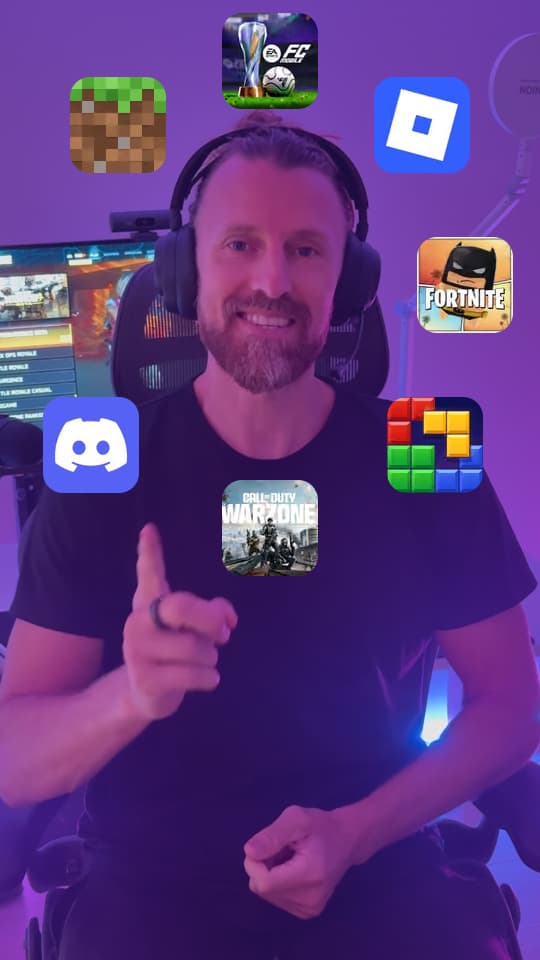
Games hold on to kids because they deliver three things every human needs: mastery, autonomy and community. The good games deliver the real thing. The worst ones only simulate it, with numbers that climb and daily quests, making money all the while. So instead of fixating on how much your child plays, ask three questions: what kind of game is it? Who is your child playing with? And where does it happen? A child building Minecraft worlds with friends in the living room and a child alone on a phone with a free-to-play game are not doing the same thing. Yes, both game for an hour. The outcomes are worlds apart.
What gaming actually is in 2026
86 per cent of Norwegian kids between 9 and 18 game: 93 per cent of boys and 79 per cent of girls. 63 per cent of the boys play every day, compared with 25 per cent of the girls. Ask the kids themselves and three games come up more than any others: Fortnite, Roblox and Minecraft. Close behind are the football game EA Sports FC, Brawl Stars, GTA and Call of Duty. Gaming, in other words, is a perfectly ordinary part of a Norwegian childhood. And the last two on that list are rated 18.
Where the gaming happens matters more than you might think. A console (PlayStation, Xbox, Switch) usually lives under the TV in the living room, in full view. A PC tends to sit in a bedroom. The phone rides along in a pocket, everywhere and invisible. The same game can exist in all three places, but the setting around it changes everything.
The big games run in rounds (a “match”): players gather, the round starts, and it lasts until it's done, usually fifteen or twenty minutes. A round can't be paused, because twenty or fifty other people are playing in that same round. So when your child shouts “I can't stop now!”, it isn't necessarily defiance. It's often literally true, the way a footballer can't walk off the pitch mid-half. My advice is to let kids “finish the round” by warning them the end is coming soon, rather than yanking them out mid-game.
The divide between games that matters most is free versus paid. A game that cost NOK 700 already has your money and just wants you to have fun. A game that cost nothing up front keeps charging as you play, either in time and attention (ads) or in a steady drip of pressure to buy upgrades and “digital items”.
The PEGI label on the box, the number in the coloured square, answers exactly one question: whether the content suits the age, meaning violence, language and scary scenes. It says nothing about how the game is built to hold on to your child or to make its money. That part, unfortunately, we parents have to work out for ourselves. I go through the most common games in the App Guide.
Two more things worth knowing. Roblox isn't a game, it's a platform holding more than 14 million games (“experiences”, in Roblox-speak) built by its own users. Quality is all over the place, and “she plays Roblox” tells you about as much as “she watches the internet”. Half of all time on Roblox goes to the 50 biggest experiences, though, so in practice there's only a handful of titles you need to know. The chat happens in Roblox's own chat, as it does in most games. Our house has one simple rule: no chatting with people you don't also know in the real world.
As kids get older, the chat tends to migrate out of the game and into Discord, a text-and-voice app where the friend group hangs out in a channel while they play. This is largely a boy thing. More than six in ten boys between 13 and 18 use Discord, compared with roughly two in ten girls. If you only have daughters, no wonder you've never heard the word at home.
The positive side of gaming
The research on gaming is a good deal sunnier than most parents' assumptions and prejudices. A European study looked at 3,195 children between 6 and 11, comparing the heaviest players, more than five hours a week, with everyone else. The kids who played the most did better at school, scored higher on cognitive skills and had fewer problems with their peers, all more often than the rest. The researchers only measured once, so they can't say which came first, and kids who game a lot doing at least as well as everyone else doesn't prove that gaming makes children brighter. But it's a solid argument against the idea that playing, in itself, breaks something.
The most cited research review in the field sorts the benefits of gaming into four groups:
- Cognitive (problem-solving, spatial reasoning)
- Motivational (persistence in the face of failure)
- Emotional (regulation, calm)
- Social
That last one weighs heaviest in what Norwegian kids themselves say. 56 per cent of the kids who game say gaming is social for them.
Then there's one argument you won't find in any study, but I can vouch for it personally. For grown-up friends with packed calendars, games night is often the only hour that actually happens. Between work, pickups and drop-offs there are friends I only ever see with a headset on, with plenty of laughter and proper teamwork. Kids run busy weeks too, and some days an hour of gaming with friends is all the social time they manage to squeeze in.
For friends with full calendars, games night is often the only hour that actually happens.
I like telling people who don't game that it's closer to sport than they think. Your pulse genuinely climbs when a round gets hectic, and the job is reading the situation, deciding fast and solving problems with your team. A body at rest doesn't disqualify it outright. Look at motorsport, golf, bowling and archery, where the head works flat out while the body barely moves. Or fishing, another social way to wind down (yes, bonus points for being out in nature, but the point stands).
Gaming is also a break the brain actually gets something out of. A game demands enough of you that the worries can't fit alongside it, and that's a rest the feed never gives. When the creators of House of Cards wanted to show how the hard-pressed politician Frank Underwood switched off, they sank him into the sofa with a controller in his hands and an action game on the TV. A sort of “modern mindfulness” for a busy world.
Potential downsides of gaming
The biggest cost is rarely the game itself. It's everything the game displaces. A day holds a fixed number of hours, so hours in the game always come out of something else. Sleep, homework, friends face to face, a body that needs to move, and important boredom. That sum, not the game, decides whether gaming is a problem in your home.
The second cost is the purchase pressure. Many of the biggest games are free to download and live off the shop inside: clothes and accessories (“skins”), currency and random rewards.
The third is the tone. 11 per cent of kids who game say they often get nasty comments while playing, and 7 per cent say their friends often shut them out of games. Not a majority, but not nothing either, and completely invisible to a parent who isn't in the room.
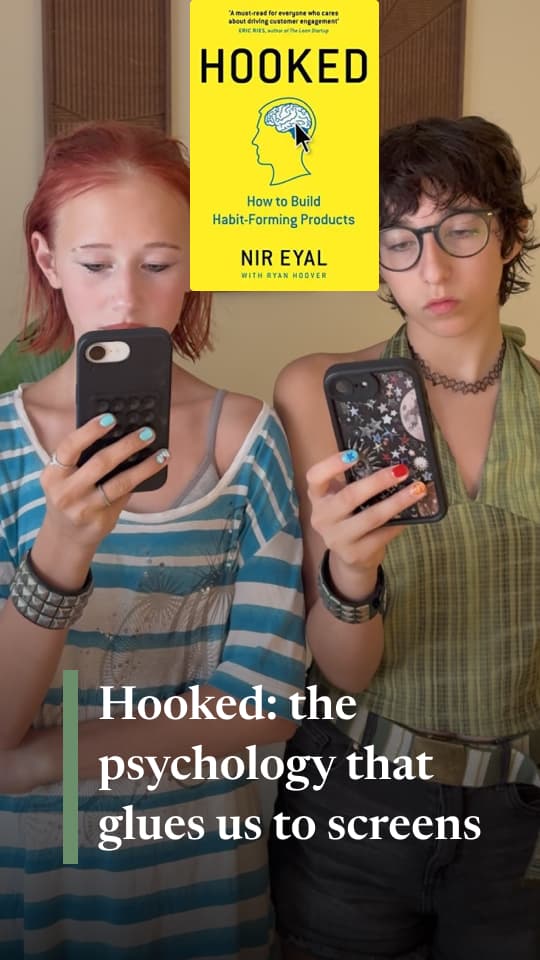
And then there's addiction, which deserves precise language rather than scare stories. By the strictest criteria, fewer than 2 per cent of those who game meet the bar for “gaming disorder”, the diagnosis the WHO introduced in 2019. That's a small number, but for the families it touches it's serious. And the deciding factor isn't how much a child games. It's whether the child can stop. The machinery behind habit-forming apps has an article of its own: Hooked: the psychology that glues us to screens.
Digital spending
Plenty of parents find a hundred kroner for a digital outfit completely absurd. I get the reaction, but it's not that simple. A diamond ring is a rock, and a thousand-krone note is a piece of paper. The value lives in enough people agreeing it exists.
In the shooter Counter-Strike, rare knives and other digital items change hands for enormous sums of real money. We're talking many millions of kroner, with prices driven by rarity, not unlike diamonds.
Think of it like shares. You own nothing physical, just a representation of value that people agree on. That might move the conversation from “this is nonsense” to a better question: how lasting is the value? If it's only cool for a week, and you can't sell it on, calling it a waste seems fair.
Why one of you is worried and the other isn't
In the Norwegian Media Authority's big survey of children and gaming, more than half of the parents with a child who games say they often or sometimes argue with the child about time spent playing. So if that argument is running in your house, you have plenty of company.
In many homes the disagreement runs between the parents too. One games, the other doesn't. The gamer sees a hobby. The non-gamer sees a closed door and a child who won't come to dinner.
In our house, the gamer is me. “Shh, dad's playing video games with his best friend,” we say to tease the kids. I've been at it for forty years: Brickles on the family's first Mac, Snake on the Nokia, games I programmed from recipes on a Casio calculator during class in upper secondary, and PlayStation 1 through 5 to this day.
This guide is what I'd tell the other parent, the one who has never held a controller and is now expected to have opinions about Fortnite.
Why don't the kids go outside anymore?
One worry that follows gaming, and screens in general, is that the child is outside less. Nobody rings the doorbell anymore. Everything social seems to happen through a headset.
There's something to it, but it didn't start with screens and gaming. Researchers tracking children's free play over time find a steady decline running five to six decades back. Less freedom to roam, less play without adults, a shrinking radius from the front door. The decline began long before the screens, and it's driven by us adults, through anxiety, organised activities and driving door to door. The same researchers believe it's a main cause of children's mental health getting worse. It wasn't gaming that started this problem. It was us adults.
The Norwegian research institute NOVA has sorted more than 500,000 survey responses from lower secondary pupils since 2014 into five leisure profiles. The homebodies have grown, from 18 to 27 per cent. But so has the group most often out with friends, from 25 to 33 per cent, now the biggest of the five. The profile that nearly vanished is the least digital one, down from 35 to 19 per cent. So the story isn't that everyone went home and stopped meeting up. It's that the screen now rides along in nearly everyone's free time, including for the teenagers who are out with friends constantly.
So why does it still feel like the game is beating the street? Thresholds, I think. Meeting up means someone has to take the initiative, propose a time and get answers out of several people who all have something else on. The game is always on, always within reach, and the friends are already inside. And the effort of seeking someone out is social training that matters: taking the initiative, risking a no, trying again.
Then there's the mastery. To get good enough at skateboarding for it to be fun, you first have to fall for hundreds of hours. A game hands you the feeling of achievement inside the first few minutes. Both are real mastery. One just pays out today, and the other pays out in the autumn. No wonder kids reach for the game, and guiding our kids towards working hard for a delayed reward is one of the tougher parts of the job.
The game pays out mastery today. The skateboard pays out in the autumn. Both are real, and no wonder a child picks the one that arrives first.
One thing is actually within your power. You can't make the game less fun, but you can lower the threshold for the alternative. Be the house that's easy to gather in, send the kids off on challenging adventures of their own, say yes to the sleepover and set up things to do that aren't staring at each other's phones. Kids sitting together, each on their own phone, is honestly one of the saddest sights I know.
The three questions that matter most
So far: what gaming is, what's good about it and what isn't. Which leaves the practical question. How do you know whether the gaming in your house is fine?
Most of us look only at the time, because time is the one thing you can measure without knowing anything about the game. But the clock scores an hour of building in Minecraft with a best friend exactly the same as an hour alone in a free game that pesters for purchases.
Three questions tell you more:
- What kind of game is it?
- Who is your child playing with?
- Where does it happen?
“For how long?” comes last of all, after the three above, which I'd argue matter more.
Question 1: What kind of game is it?
Kids are drawn to games because games deliver three things every human needs, often more reliably than the rest of the day does:
- Mastery: you get measurably better, and the game meets you at your level.
- Autonomy: you decide what to do and when.
- Community: you play and solve challenges together with someone.
Those are the main reasons games are fun, and the research finds they predict both the enjoyment and the urge to keep playing.
But some games genuinely deliver on those needs, and some merely simulate them:
- False mastery is progress that came from paying or waiting, not from getting better.
- False autonomy is daily quests, streaks and seasons deciding when you play.
- False community is a lobby full of strangers or a spot on a leaderboard.
A game that genuinely delivers lets your child build skills, make their own choices and belong to something real. A game that simulates it takes your child's time and attention and gives nothing back.
In practice, most games fall into one or more recognisable types:
- Building and creative games: Minecraft, Roblox Studio, the Lego games. Your child makes something that's still there afterwards.
- Story adventures: Hogwarts Legacy, the Zelda games. These end, which means a stopping point comes built into the product itself.
- Co-op games: Overcooked, It Takes Two, Fortnite and Warzone (solos aside, which are played alone). Here the cooperation is the game, and you get nowhere without talking to each other.
- Skill games: Rocket League, EA SPORTS FC, platformers like Geometry Dash. Getting good here works like getting good at guitar or handball: hours of repetition, plenty of failure and a skill that eventually sticks.
- The ones that do none of it: free mobile games built around waiting and daily quests. You shuffle tiles until your lives run out, then wait a few hours or pay to continue. Or the game banks points while you're away, so you have to check in and collect them before they're lost. Daily quests are streaks by another name, and they don't build joy. They build the fear of losing something.
Games like Fortnite and Brawl Stars sit in several of these categories at once. Kids genuinely improve by practising, most play in squads with friends, and some build their own maps. At the same time, Fortnite runs daily quests, seasons and a shop that never shuts up. Many of the very biggest games are built exactly like this. They give your child something real, and they're engineered to capture as much time and money as they can.
The fastest test takes a few minutes and demands zero gaming knowledge: follow the money. Open the shop inside the game and look at what it sells and how hard it pushes. A game you bought once has been paid. A free game with a shop lives off your child coming back and paying, in money or in time.
Take EA Sports FC, the big football game. It's rated PEGI 3, suitable for everyone. On the same box sits the content label “paid random items”, because the game sells card packs with random contents for real money. The exact mechanic of physical collectible cards.
The age rating tells you whether the content suits your child. It doesn't tell you what the game is built to make money on.
If you want a simple rule of thumb, borrow mine. No to free games unless they give without taking. No to purchases inside the game. So by all means, play Roblox or Fortnite and have a great time!! Just don't leave your money (or mine) in there. It's full of temptations, and you'll do perfectly well without. I hold myself to the same rule in Warzone, itself a free game. I've bought every yearly Call of Duty title as it came out, but I don't “waste money” on trinkets in the game. Dad hunts skills, not skins 💪
Question 2: Who is your child playing with?
There are four ways to play, and they're not created equal:
- With friends in the same room (yes please)
- With friends online (fine)
- Alone (preferably not)
- With strangers online (no thanks)
The social side is the strongest argument for saying yes to gaming at all. Friends in the same room are the good old LAN party in miniature, and friends online are usually the same gang from class, just spread across their own living rooms.
The sound of a child laughing out loud with a headset on is the sound of friendship, even if all you can see is their back.
The risk lives in the fourth mode, text or voice chat with strangers. Take it seriously, and manage it with the game's own settings (chat turned off, or friends only) and with a door that stands open, so your child comes to you the day someone says something odd, without fearing they'll lose the game. The game-by-game details are in the App Guide.
We've had our own scare. Some worrying reports surfaced from Roblox, exchanges between one of my daughters and strangers that should never have seen the light of day. They led to some big conversations, and to our rule that she no longer games alone, with an exception for good story games. Only with friends. Gaming should be a positive, social thing, not lonely hours or unpleasant exchanges with strangers.
On the subject of nasty exchanges: things heat up fast when virtual characters fall out and can say “whatever they like” without ever facing the consequences in person. All the more reason for us parents to stay close and steer towards a healthier tone when it's needed.
So the rule in our house is that gaming is social, together in the room or with friends online. I've made one exception for good story games like Hogwarts Legacy (Harry Potter), the kind of game that delivers mastery and autonomy and actually ends. I like to say it's watching a film where you're the one solving the problems. Arguably a step up from passive viewing?
Question 3: Where does it happen?
An hour of gaming does quite different things to a body depending on where it happens:
- Hunched over an iPad in bed.
- On the sofa, controller in hand, eyes up at the TV.
- On the bus, phone in hand.
- At a desk with the screen at eye level.
Measurements on children show the neck bends considerably further over a tablet than over a laptop, and that lying down with a phone brings the most discomfort. Children aren't small adults here either. The head is larger relative to the body, and the muscles are still being built. One practical piece of advice recurs in the research: avoid more than about 20 minutes at a stretch with a screen held in the hands. This is pure ergonomics, and it's easy to fix. Move the gaming to a screen that stands still at eye level, and the body straightens up on its own.
The other half is about you. Gaming in the living room is gaming you can parent. You hear the tone of the chat, you see what the game is, and you can sit down alongside. Gaming in a pocket is invisible, and invisible is exactly why screen time ends up as the only tool you have left.
Yours truly games standing up. PlayStation 5, PC monitor, controller and a sit-stand desk. All my friends think it's weird. It works remarkably well, and it beats sitting and gaming for hours by a mile.
My personal line: no games on the phone or the tablet at all. Gaming should be a planned activity, not an always-available one, and it should cost the body as little as possible. I've gamed my whole life, and there isn't a single game on my iPhone or iPad. I wrecked my neck and both arms before I started taking ergonomics seriously.
Good ergonomics is a gift I've passed on to the kids in the form of a proper gaming PC setup, so nobody should need to game on a phone or an iPad. I haven't been absolute about it, though. Instead of a hard rule, I've “nagged over and over” about moving the gaming off the iPad.
So, how long is it okay for kids to game in a day?
An hour of gaming ≠ an hour of gaming. The answers to the three questions above change what that hour amounts to, drastically. An hour of Minecraft with friends in the living room can be purely good. An hour alone with Block Blast on the phone can be purely bad.
For round-based games in particular, agreed play sessions tend to work better than hard limits in Screen Time or Family Link. A child mid-round can't just walk out without consequences for everyone in it. A child mid-build may lose whatever isn't saved. Give some landing time. Agree when it ends, remind them fifteen minutes before, and let the final minutes be their own call. Do I have time for one more, or is it time to wind down?
The recommended total screen time per day, age by age, is in the screen time staircase. And the yardstick for whether the level suits your child was never the time itself. It's what the gaming displaces: is your child sleeping enough? Is the homework getting done? Are there friends beyond the screen too? Does the body get to move? If it's yes down the line, you can relax.
Some kids watch others play more than they play themselves
Something that surprises many parents: kids watch gaming, a lot, on YouTube and Twitch. They follow players the way we followed footballers, and they know the names, the catchphrases and the highlights. Usually it's completely fine, their version of the sports broadcast. But watching has a pull all of its own, and it belongs in the tally when you look at where the screen time actually goes.
This one I know from the inside. Gaming videos have been my break-time entertainment for the past ten years, and getting hooked is easy. It feels like watching sport, the kind where you're awed by someone doing the thing you do, at an absurdly high level. On top of that, most of the gamers I follow are genuinely entertaining. For the football lovers out there (not me..): imagine your favourite player dazzling on the pitch while running a comedy routine. No wonder it sticks.
I've deleted YouTube more times than I can count. Eventually I've steered both YouTube and gaming into “just about right”, where I can feel that I hold the wheel and my values decide the use.
The dialogue with the kids
A parent who doesn't game really has only one move that works, and it's curiosity. “How long have you been playing?” opens a defence. “Show me” opens a tour, and the tour hands you everything the three questions need: what kind of game it is, who's in there and where it happens.
Some lines that open more than they close:
- “Show me what you've built.”
- “What's the best thing that can happen in a round?”
- “Which of those are your friends?”
- “What's the dumbest thing you can do or buy in that game?”
If you're going to sit down and properly “have the talk” to open up the dialogue, try something like this:
“I'm going to ask you about three things instead of nagging about how much you play: what kind of game is it? Who are you playing with? And where do you play? Not because I want to take the game away from you. It's because games are so different. Some give you something, and some mostly exist to soak up as much of your time and money as they can. You know more about games than I do, so I want you to show me.”
Closing thoughts
Kids have always played, and most have been the better for it. What's new is that games have grown an economy that often works against your interests and your child's.
The most important skill you can build is recognising what kind of game it is, who your child plays with and where it happens. And those three answers come from sitting down next to them and asking.
The work you put in now keeps paying off as your child grows. They'll outgrow the rules at home. Your curiosity, and the way you size up a game, they can learn along the way and carry with them.
The toolbox
Five moves for gaming at home.
Know a parent who hasn't a clue about gaming? Send them this.
Sources
- Medietilsynet (2024): Barn og medier, barn og unges spillvaner. 3 212 barn 9–18 år og 2 545 foreldre ↗
- Kovess-Masfety mfl. (2016): Is time spent playing video games associated with mental health, cognitive and social skills in young children?, Social Psychiatry and Psychiatric Epidemiology ↗
- Granic, Lobel & Engels (2014): The Benefits of Playing Video Games, American Psychologist ↗
Show more sources (11)Show fewer sources
- Ryan, Rigby & Przybylski (2006): The Motivational Pull of Video Games. A Self-Determination Theory Approach, Motivation and Emotion ↗
- Stevens mfl. (2021): Global prevalence of gaming disorder, a systematic review and meta-analysis, Australian & New Zealand Journal of Psychiatry ↗
- Gray, Lancy & Bjorklund (2023): Decline in Independent Activity as a Cause of Decline in Children's Mental Well-being, Journal of Pediatrics ↗
- Bakken, Abildsnes & Sletten (2024): Fritidsprofiler blant ungdom. Fritid, sosial ulikhet, livskvalitet og endringer over tid, NOVA-rapport 12/24 ↗
- Nigg mfl. (2021): Relating outdoor play to sedentary behavior and physical activity in youth, results from a cohort study, BMC Public Health ↗
- Intolo mfl. (2019): Pain and muscle activity of neck, shoulder, upper back, and forearm during touch screen tablet use by children, Work ↗
- Roblox Corporation (2026): Form 10-K for regnskapsåret 2025 ↗
- Medietilsynet (2022): Barn og medier, barn og unges bruk av sosiale medier ↗
- PEGI: aldersmerking og innholdssymboler ↗
- HK-dir (PISA 2022): De ti mest populære yrkene blant unge ↗
- FTC (2022): Epic Games bøtelagt over 500 millioner dollar, kjøpsmønstre og personvern ↗
Comments
No comments yet. Be the first to say what you think.


 TikTok
 Roblox
 Snapchat
 Minecraft
 Fortnite
 YouTube
 Mudita Kompakt
 Kindle Scribe
 Smiling Mind
 Opal
Opal Balance
 Homie
Homie