You're bored? Good!
Your brain has a network of its own that wakes up only when you're not doing anything in particular. It tidies memories, rehearses the future and incubates ideas. The research makes a strong case that boredom is underrated, and there's one concrete step you can take today.

Kids and grown-ups alike need to stop running from boredom. It matters more than it feels like it does. When you're bored, your brain switches on a network of its own that sorts memories and explores new ideas. Fill every spare minute with input and that never happens. Four good solutions wait at the bottom of the article.
The network that wakes up when nothing happens
Around the turn of the millennium, the neuroscientist Marcus Raichle noticed something odd. People lying perfectly still in his scanner, no task, no stimuli, didn't have quiet brains. A particular set of brain regions worked harder when people were “doing nothing”. He named it the default mode network.
That's the network that takes over when your gaze drifts out of the bus window. And it's doing anything but nothing:
- It tidies and sorts memories, and pins down what you've learned.
- It rehearses the future: the conversation you're dreading, tomorrow's plan.
- It practises understanding other people. Daydreams are often little social simulations.
- It incubates ideas. Many of your best ones don't arrive while you're working, but while you're waiting for the bus or standing in the shower.
What the research actually shows
In a well-known 2012 experiment, the psychologist Benjamin Baird had people work on creative tasks, gave them a break and measured what the break did. The people handed a dull, simple task during the break, in other words time for their minds to wander, came back with measurably more creative solutions to problems they'd seen before it. The people who worked through the break, or simply rested, got no such boost.
British researchers found something similar in 2014: adults who first had to do something properly tedious, like copying phone numbers out of a directory, came up with more ideas afterwards than the control group did. The boredom seemed to tip the brain into daydreaming, and the daydreaming did the work.
Boredom isn't a problem to be solved. More often it's the groundwork for an idea.
Then there's the study that says the most about us grown-ups. Researchers at the University of Virginia asked people to sit alone with their thoughts for a quarter of an hour. Plenty found it so uncomfortable that they preferred giving themselves small electric shocks to just sitting there. 67 per cent of the men pressed the button, and 25 per cent of the women.
What this means at your house
None of this is an argument for romanticising boredom, or for banning screens in the car. It's an argument for no longer treating every spare minute as a problem to fix. A child who gets to be a little bored, with no grown-up rushing in with entertainment, is practising a skill they'll use for life: being in their own head.
The hard part isn't the kids. Kids don't do as you say, they do as you do. Stand in the checkout queue with your phone out and they learn that spare minutes exist to be filled.
The brain that never gets a day off
For a lot of kids, the default now is a brain that's never alone. Out of bed, podcast on. Music on the way to school, a screen at break time, something playing in the background during homework. This isn't just a screen time issue. It's input, constantly, until every last spare minute is spoken for.
And we grown-ups aren't necessarily any better. The discomfort of sitting quietly with our own thoughts, the very discomfort that had people choosing electric shocks in the study above, means we plug the gaps ourselves: a podcast in the kitchen, radio in the car, the phone in the queue. And so the default network never gets its work done. Not ours, and not the kids'.
Boredom isn't empty time. It's the brain's workshop. Kids who get to be bored are practising being in their own head.
At our house, the answer became input-free zones: fixed times that aren't just screen-free but free of input altogether. Nothing on. No podcast murmuring in the background, just quiet and your own thoughts. Ours are:
- The first hour of the morning, with an exception for the calendar and the school apps to check the day's plan
- The last hour before bedtime (the why is in “The science of good sleep”)
- Every meal
Input-free meals are easy enough when you're eating together and the conversation flows. But have you ever tried “mindful eating” completely on your own? Do you actually eat your lunch alone with your thoughts, or do you read the news, or scroll Instagram? I'm an on-again, off-again dopamine drinker at lunchtime. I've had stretches where the food and my own thoughts were enough, but it doesn't take much before I'm “rewarding myself” with a few YouTube shorts. Not great.
Long car journeys are another place we've had some of our best conversations and oddest creative sparks. When the plea for music rises from the back seat, I'll sometimes answer, “No, let's see what happens if we're bored for a bit first.” The first few minutes are mostly complaints. Then they die out. And a couple of hours later we've had conversations we'd never have had otherwise, and laughed at nonsense none of us knew we were capable of. My whole job along the way is to hold the line, calmly and with the reasons ready, until reality sinks in and the objections stop. That's when the fun starts.
Talking with your kids
“Your brain has its own work mode that only switches on when you're a little bored. That's when it tidies up everything you've experienced and comes up with new ideas. So when I don't rescue you from boredom with a screen, it's not because I'm mean. It's because being bored actually matters.”
Closing thoughts
Of everything on this site, this may be the topic that has annoyed my kids the most: “I'm bored!” ... “Good! Being bored is so important. We did it all the time when we were little.” But without a proper explanation, repeating it over and over just breeds irritation, not insight. I only recently learned the why well enough to explain it myself. Until then it was pure “things were better in my day”, though ours might be the first generation to occasionally be right about that. Once the explanations arrived, the message started shifting from annoying to something the kids could understand.
The toolbox
Four moves that cost nothing and don't require a family meeting.
When “I'm bored” arrives, start with one of these:
- “Lovely, that means something's on its way.”
- “I'm a bit bored too. Isn't it great.”
- “I can't wait to see what you come up with.”
The point is to leave the boredom unanswered, with no activity suggestions, ideally alongside a word on why that's a good thing.
Know a parent who feels guilty when their kids are bored? Send them this.
Sources
- Raichle mfl. (2001): A default mode of brain function, PNAS ↗
- Baird mfl. (2012): Inspired by distraction. Mind wandering facilitates creative incubation, Psychological Science ↗
- Wilson mfl. (2014): Just think. The challenges of the disengaged mind, Science ↗
- Mann & Cadman (2014): Does being bored make us more creative?, Creativity Research Journal ↗
Comments
No comments yet. Be the first to say what you think.


 TikTok
 Roblox
 Snapchat
 Minecraft
 Fortnite
 YouTube
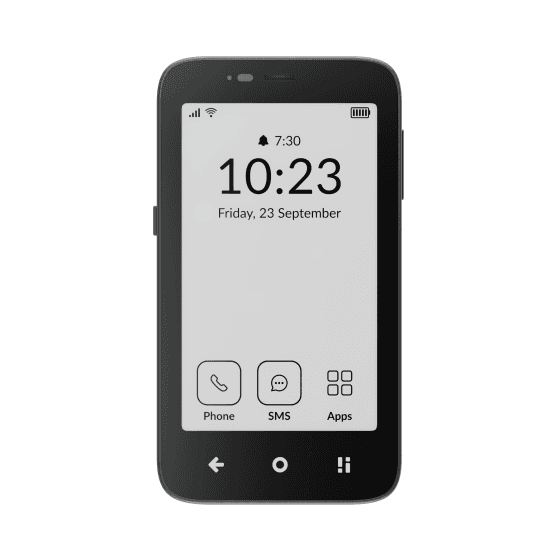 Mudita Kompakt
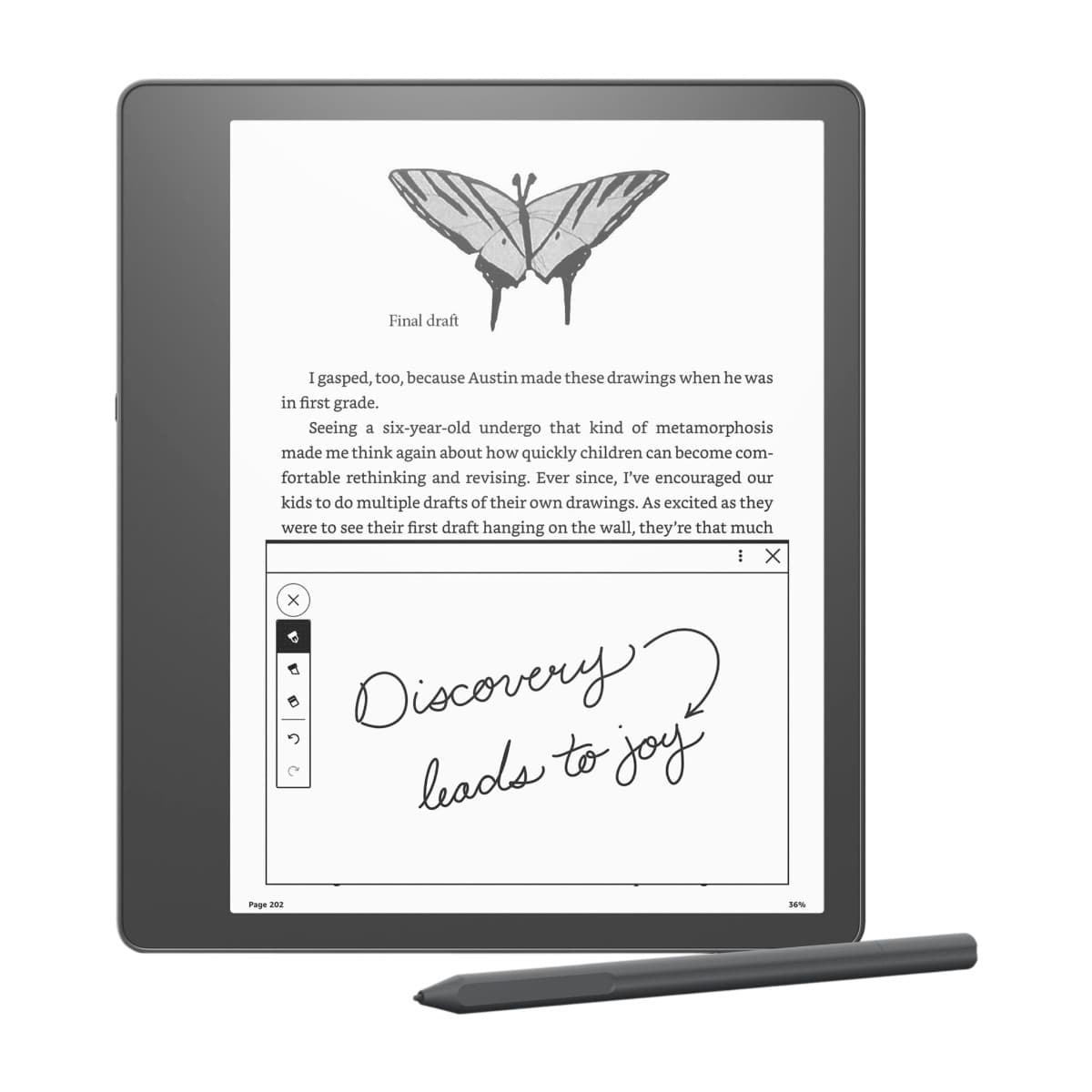 Kindle Scribe
 Smiling Mind
 Opal
Opal Balance
 Homie
Homie