We were the experiment: our kids are round two
If you're between 30 and 50, you were part of an experiment nobody signed off on: social media and smartphones rolled out with no training, no research and no experienced adults in the room. Some of us came out with tools, some with habits, and which one you got was largely luck. Now it's our kids' turn, and this time the outcome doesn't have to be down to chance.
When Facebook and the iPhone arrived, there was no research and no adults who could guide us. We did our best to figure it out on our own, with mixed results. Our kids are in round two of the same experiment, against a much stronger opponent. But this time the knowledge exists, and what matters most is what your child sees you do.
Nobody gave us a handbook
On 26 September 2006, Facebook opened to everyone over 13. A few months later, Steve Jobs walked on stage and held up the first iPhone. Within a year, childhood, friendship and attention were playing by entirely new rules.
If you're between 30 and 50 today, you were somewhere between 10 and 30 when it happened. Think back: who taught you anything? Your parents knew less than you did. The researchers had nothing to study yet. We downloaded first and asked questions later, if we asked at all.
And it was thrilling, overwhelmingly so. Old friends resurfaced from across the country and the world. What we didn't know was that we'd been handed a new drug, free, straight into our pockets, with no knowledge, no tools and no natural defences to slow us down.
An experiment with random results
Some of us came through fine. We noticed what the screen was doing to us, worked out our own ground rules, put the phone away when it took too much. Others of us are still scrolling in bed at one in the morning, cross with ourselves because the choices no longer feel like our own. Most of us are both, depending on the day.
How each of us fared had less to do with being “strong” or “weak” than with plain luck. This was never a test of character. Everything played a part, from your inner life to whatever your friends happened to be into. And while we fumbled along, the other side went professional. The student projects of 2006 are now an industry working from a documented recipe for gluing us to our screens.
I'm one of those people who've sunk hundreds of hours into reading about this. That's not a reasonable ask of anyone with a full-time job, kids and a family calendar. It's why this site exists. Not because I'm any better at this than you, but because it became my interest, and eventually my job, to walk other families through the challenges around kids and technology.
We never got the training. We were the training.
Round two is underway
Our kids now stand where we stood, with two important differences.
The first is bad news: their opponent is far better than ours was. The apps they meet have been sharpened by twenty years of measuring exactly what keeps us stuck in the feed.
The second is good news: this time, the knowledge exists. The research is far more nuanced than the headlines, the big analyses find smaller effects than you might expect, and much depends on how you measure. But on one point the findings are genuinely encouraging: parents who take an active part in their kids' screen lives, who talk, explain and set limits with the child rather than simply banning things, are linked to less problematic use. Guiding works. What was luck in our round can be a choice in theirs.
The most important chapter is about you
Here's the lovely part: you don't have to be fully qualified to guide. You're still in the experiment yourself, and that's actually an asset. Kids don't do what you say; they do what you do. A child who watches an adult manage their own phone with their cards on the table learns more than any rule could teach.
Your choices are the curriculum, as long as your child sees them: “I'm leaving my phone in the kitchen, or no reading is getting done tonight.” And when you do set a rule for your child, it comes with a proper reason. Your own story is the best one you've got.
If you're up for spending a couple of hours becoming the family “expert” on kids and technology, work through the Parent Guide: the site's 10 most important articles, with a little quiz at the end. Finish it and you'll have more to offer your kids than almost anyone had for us growing up.
Talking with your kids
“When I was your age, these apps didn't exist. And when they arrived, nobody taught me a thing about them. I had to figure it all out on my own, and there are things I wish an adult had told me. That's why we talk about this at home. Not because you've done anything wrong, but because you shouldn't have to be as alone with it as I was.”
Closing thoughts
It's not your fault you never got a handbook. Nobody did, and nobody owes any guilt for how they got through round one. But in round two the handbook exists, and leaving it on the shelf is a choice too. I'm wary of wagging fingers, but we parents do carry a responsibility here. We can't look away while our kids stand alone against something built to beat them.
The toolbox
Three steps that use your own story as a tool.
Know someone who could use a little help figuring all this out? Send them this.
Sources
- Facebook (2006): Facebook Expansion Enables More People to Connect, åpen registrering for alle over 13 år ↗
- Apple (2007): Apple Reinvents the Phone with iPhone, pressemelding ↗
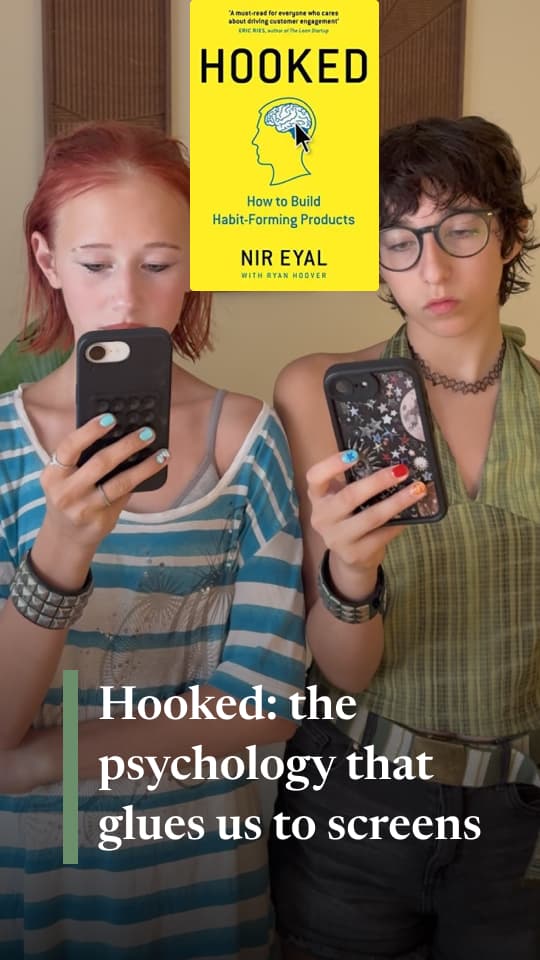
- Nir Eyal: Hooked-modellen (trigger, handling, belønning, investering) ↗
Show more sources (2)Show fewer sources
Comments
No comments yet. Be the first to say what you think.





 TikTok
 Roblox
 Snapchat
 Minecraft
 Fortnite
 YouTube
 Mudita Kompakt
 Kindle Scribe
 Smiling Mind
 Opal
Opal Balance
 Homie
Homie